
FDA Requires GLP-1 Label Warning for Potential NAION Risk
11/16/2026
Key Takeaways
- For people in the United States taking GLP-1 receptor agonists for type 2 diabetes, weight management, or other approved uses, the FDA is requiring class-wide labeling about potential NAION risk.
- Rare NAION events occurred more frequently with GLP-1 receptor agonists than with the combined comparator group in FDA’s randomized-trial analysis (10 versus 5 events), a small difference based on few events.
- FDA’s Sentinel analysis found higher NAION risk versus DPP-4 inhibitors but no statistically significant increase versus SGLT-2 inhibitors.
- The FDA describes a potential risk of a rare condition, not a boxed warning or a restriction on use.
On November 9, 2026, the FDA required application holders to update Warnings and Precautions labeling for all GLP-1 RA medications to describe a potential increased NAION risk. The class includes medications such as Ozempic, Wegovy, Rybelsus, Victoza, Saxenda, Trulicity, Mounjaro, Zepbound, and the recently approved Foundayo (orforglipron). Approved uses of these drugs include type 2 diabetes, weight management, reducing the risk of major cardiovascular events in certain adults, reducing the risk of worsening kidney disease in adults with type 2 diabetes and chronic kidney disease, treating obstructive sleep apnea in adults with obesity, and treating metabolic dysfunction-associated steatohepatitis with fibrosis. The FDA’s review was prompted by a July 2024 study in JAMA Ophthalmology (Hathaway et al.), although the agency identified several limitations of that study. FDA assessed adverse-event reports, available animal data, randomized trials, case reports, and observational evidence. Its randomized-trial meta-analysis combined 126 trials involving 134,253 patients (78,217 GLP-1 RA recipients and 56,036 comparator recipients) and compared GLP-1 RAs with placebo or non-GLP-1 glucose-lowering medications. Separately, a retrospective cohort in the Sentinel Real-World Evidence Data Enterprise Commercial Network examined adults with type 2 diabetes who initiated GLP-1 RAs, sodium glucose co-transporter-2 (SGLT-2) inhibitors, or dipeptidyl peptidase-4 (DPP-4) inhibitors during 2019–2024.
Across the randomized trials, FDA identified 15 probable NAION events: 10 among GLP-1 RA recipients and five among placebo recipients; no events occurred among recipients of other non-GLP-1 glucose-lowering medications. NAION cases had also been reported for all currently marketed GLP-1 RA products. Those reports show that events occurred across the marketed class but do not establish that treatment caused them.
In the trial analysis, NAION incidence was 6.4 versus 3.8 events per 100,000 person-years with GLP-1 RAs versus the combined comparator of placebo or non-GLP-1 glucose-lowering medication, an absolute difference of about 2.6 events per 100,000 person-years (calculated from the reported rates). The FDA’s communication did not report a confidence interval for this comparison, and the small number of events leaves considerable uncertainty. In the Sentinel cohort, NAION incidence ranged from 26 to 32 events per 100,000 person-years across the groups: 30–32 among GLP-1 RA initiators, 31 with SGLT-2 inhibitors, and 26 with DPP-4 inhibitors. FDA found increased risk relative to DPP-4 inhibitors: the hazard ratio (HR) was 1.43, with a 95% confidence interval (CI) of 1.02–2.01. The increase versus SGLT-2 inhibitors was not statistically significant (HR 1.19; 95% CI 0.91–1.54). FDA also reported that other methodologically rigorous observational studies consistently found increased risk versus both SGLT-2 and DPP-4 inhibitors.
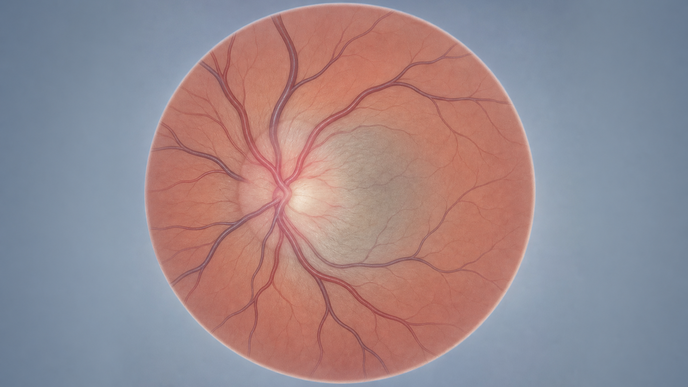
FDA characterized the association as a potential risk of a rare condition, not proof of causation. Spontaneous reports are difficult to interpret because smoking, diabetes, high blood pressure, sleep apnea, anemia, and kidney disease are NAION risk factors that may overlap with conditions among GLP-1 RA users. NAION can cause permanent vision loss; FDA describes missing or blurred portions of vision, altered color perception, and reduced central sharpness, with symptoms sometimes noticed on waking. The agency advises immediate contact with a health professional for sudden, painless visual changes in one eye and prompt ophthalmology evaluation if NAION is suspected.
FDA’s class-wide labeling action communicates a possible rare NAION risk without establishing causation, and it does not restrict the approved uses of these medications. After a NAION event, the agency advises patients to discuss continuing versus stopping their GLP-1 RA with a health professional. FDA tells health professionals to consider discontinuation unless the benefits of treatment clearly outweigh the risk; stopping treatment is not automatic. Suspected adverse events can be reported to the FDA’s MedWatch program.
Clinician Questions
Has a mechanism been identified for NAION associated with GLP-1 receptor agonists?
FDA found no mechanism linking GLP-1 RA use to increased NAION risk in its review of available animal data. NAION involves reduced blood flow to the front of the optic nerve, but its underlying cause is not completely understood; the absence of an identified animal mechanism does not exclude an association.
Does NAION in one eye increase the risk of NAION in the other eye?
FDA says a person who has experienced NAION in one eye has an increased risk of NAION in the other eye. The agency does not identify this as a GLP-1 RA–specific effect.
Can the general-population NAION incidence be compared directly with NAION rates in GLP-1 receptor agonist users?
No. FDA cites a background incidence of 2.3 to 10.2 cases per 100,000 persons per year in adults older than 50 from published literature. That range concerns a different population and comparison frame than the randomized-trial drug groups and the Sentinel cohort of adults with type 2 diabetes. It is neither an untreated control group nor an estimate of risk attributable to GLP-1 RAs.
Recommended Reading
- For more on GLP-1 therapy applications: How GLP-1s Provide New Options to Manage Heart Disease
This content is intended for healthcare professionals for educational purposes. The article and its image were developed with AI assistance and reviewed by members of the ReachMD team prior to publication. Please refer to the original source linked for the complete and most up-to-date information.